The Approach
Culture is the way things are actually done around here. That’s what we work on.
Not the values on the wall – the patterns in the corridor. How decisions get made when it’s busy, what gets celebrated, what gets let slide, how it feels to raise a problem. That’s culture, and it can be worked on deliberately.
Staff believe what they see, not what they’re told.
Your culture is already telling people what to do.
Every workplace trains its people constantly, whether anyone means it to or not. Staff watch what leaders do under pressure, notice what gets rewarded and what gets tolerated, and adjust. A new hire learns the real rules of your organisation in their first fortnight – not from the induction pack, from the floor.
Which is why leaders are the work. A leader casts a shadow, and the team lives in it. Change what your leaders do – consistently, visibly, especially on the hard days – and the culture starts moving. Skip that part and nothing else you try will hold.
The arc
Four stages, each with something you can hold.
-
Define the culture you actually want.
We start at the top, with your executive team, and get specific. Not aspiration words – behaviour. If the culture were right, what would a family member notice at reception, or a client notice on a call? What would a night shift handover, or a site pre-start, actually sound like? What would a manager do differently when a complaint lands? We describe the target culture in terms real enough that you’d recognise it in a corridor.
What you’ll have A target culture described in observable behaviour, agreed by your leadership – something you can hold the organisation to, not a poster.
-
Build the plan to close the gap.
Culture shifts through three levers. How leaders behave – the shadow they cast. What the organisation signals – what gets celebrated, measured, and made an example of. And the systems underneath – the structures, processes, and resources that either back the desired behaviour or quietly punish it. The plan works all three at once, led from the top, because staff believe what they see, not what they’re told.
What you’ll have A culture action plan with named owners – who is changing what, in which order, and how you’ll know.
-
Develop the leaders. This is the engine.
Always the centre of the work, never an add-on. Your leaders – the people who set the emotional weather of every shift – build the emotionally intelligent leadership competencies that let them cast a different shadow. Measured properly with a 360 matched to the question, before and after, so the shift is visible, not vibes.
What you’ll have Leaders who lead differently on a Tuesday afternoon, and the measurement to prove it.
-
Keep it alive between sessions.
This is where most culture work dies, so it’s designed in from the start. My tools – CHRIS, the Pulse, the Loops – keep the new behaviours in front of your leaders in the flow of work: a rhythm of small, real actions, reviewed on a regular beat, visible over time. The program builds the foundation. The rhythm keeps it alive.
What you’ll have An operating rhythm your leaders actually run – and a culture shift you can watch move.
You’ve probably run a leadership program before. Here’s why this goes differently.
Most leadership development is an event. People go away, feel genuinely moved, come back – and the roster, the call bells, and the old habits are waiting. Within a few months the place feels the same, and everyone quietly concludes that culture change doesn’t work here.
The problem was never the people or the program. It’s that nothing connected the learning to the daily work. So in this approach, the development stream and the embedding rhythm are one system: what a leader works on in a session becomes what they practise on the floor between sessions, and what they practise gets reviewed, adjusted, and kept in front of them. Change survives because it has somewhere to live.
Where it comes from
Borrowed from the best, built for the floor.
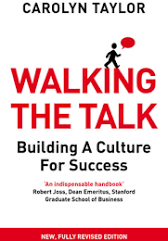
The method adapts Carolyn Taylor’s Walking the Talk approach to culture – decades of evidence that culture changes through leaders’ behaviour, symbols, and systems, led from the top – combined with evidence-based emotional intelligence as the science of the leadership work. What I’ve added is the setting: I’ve run this from the executive chair myself, and every part of the approach is shaped for high-stakes workplaces where how staff feel shapes what happens next – on a site, on a care floor, or on a client team.
Talk it through against your reality.
The approach is systematic; the way it lands in your organisation never is. If you want to walk through what this would look like against your sites, your leaders, and your last engagement survey – that’s a conversation I’m happy to have.
An email to me, not a funnel. campbell@culturecrunch.io